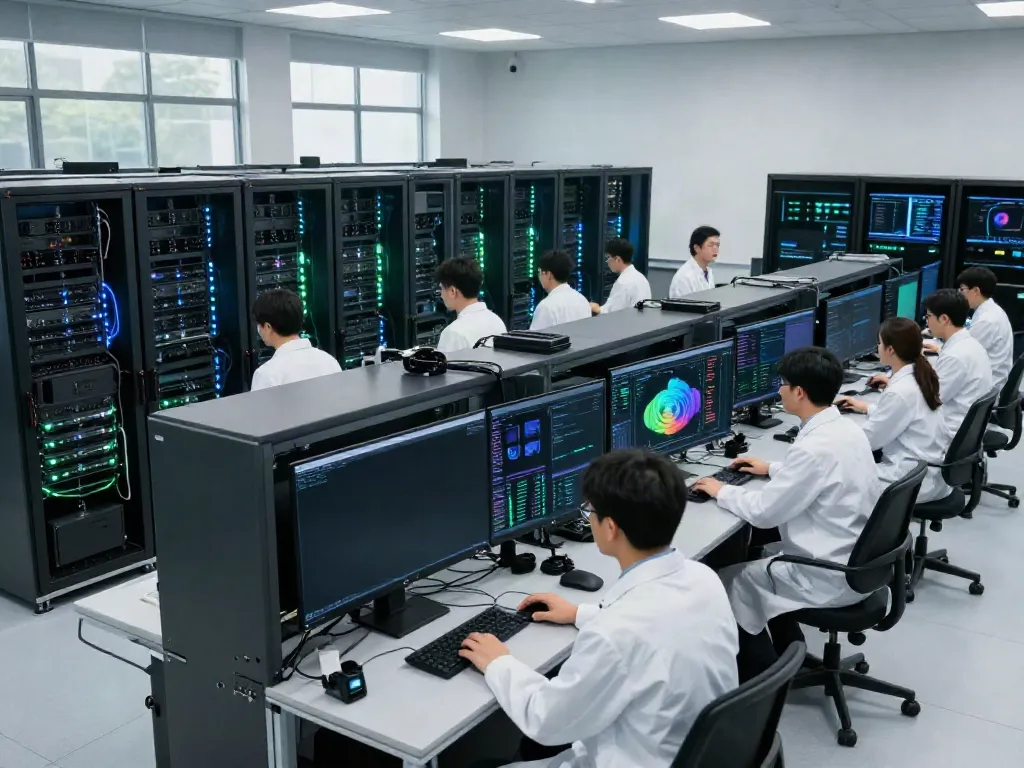
Understanding the AI Data Center Landscape
The rise of artificial intelligence (AI) has given birth to a new era of data management, shifting the landscape significantly toward specialized facilities designed to harness extensive computational power. These facilities, known as AI data center, are not merely extensions of traditional data centers; they are purpose-built to handle the demanding workloads that AI applications require. Understanding the intricate operations and structure of AI data centers is vital for anyone interested in participating in the burgeoning AI Token Economy.
What is an AI Data Center?
An AI data center is a facility specifically designed to support the training, deployment, and operational requirements of AI applications and services. Unlike conventional data centers, which primarily handle traditional workloads, AI data centers focus on high-performance computing (HPC) capabilities, boasting a significant number of Graphics Processing Units (GPUs) and other specialized hardware to process vast datasets quickly.
Key Components of AI Data Centers
- High-Performance Computing Hardware: AI data centers are equipped with powerful GPUs, TPUs (Tensor Processing Units), and CPUs designed to handle complex computations efficiently.
- Storage Solutions: Fast data access is crucial for AI workloads, necessitating innovative storage solutions like NVMe over Fabrics and high-capacity SSDs to manage vast datasets.
- Networking Infrastructure: High bandwidth and low latency networks ensure seamless communication between computing units and storage systems, enabling rapid data processing.
- Cooling Systems: Due to the immense heat generated by high-density computing, advanced cooling systems are imperative to maintain optimal operating conditions.
Importance of Energy Efficiency
As AI workloads proliferate, so do energy requirements. AI data centers must prioritize energy efficiency, utilizing strategies such as advanced cooling technologies, renewable energy sources, and optimized power usage efficiency (PUE) metrics. This focus not only helps in reducing operational costs but also minimizes the environmental impact of AI infrastructure.
Participating in the AI Token Economy
The AI Token Economy allows participants to contribute to and benefit from AI data center operations by utilizing tokens as units of measure for AI model usage. Understanding how to effectively engage in this ecosystem is essential for individuals and enterprises aiming to harness the potential of AI.
How AI Data Centers Utilize Tokens
In the AI Token Economy, tokens represent computational billing units, analogous to how kilowatt-hours represent energy consumption. Every operation involving AI models is converted into input tokens, processed to generate output tokens, and then measured against the energy consumed during the process. This model not only standardizes usage but also ensures transparency for participants.
Your Contribution to AI Infrastructure
Individuals can support AI infrastructure by selecting various AI Infrastructure Power Plans offered by platforms like 51 AIpower. These plans provide a practical pathway for users to contribute to the underlying electricity and computing capacity required for AI data centers, thereby facilitating the processes that result in token generation.
Calculating Rewards in the Token System
Rewards in the AI Token Economy are calculated based on an individual’s contribution to the energy consumed by AI workloads. The system tracks the electricity usage supported by a participant's power plan and correlates it to the number of tokens processed. After deducting operational costs, the participant's eligible share of rewards is determined, providing an incentive for ongoing contributions.
Advantages of Leading AI Data Centers
The competitive landscape among AI data centers is intensifying, with many organizations vying for dominance. Understanding the advantages that the leading facilities offer can illuminate prospects for investment and participation in this sector.
Competitive Edge in AI Deployment
Leading AI data centers possess significant advantages, including state-of-the-art technology, efficient operations, and strategic partnerships. These factors enhance their ability to deploy AI applications rapidly and at scale, providing a crucial competitive edge.
Scalability and Flexibility of Operations
Flexibility in scaling operations is one of the most distinguishing features of modern AI data centers. With the ability to quickly adapt to varying workloads and demands, they can optimize resource allocation and enhance operational efficiency.
Real-World Examples of Successful AI Data Centers
To further elucidate the advantages noted above, consider examples like NVIDIA’s data center operations, which leverage high-performance GPUs to optimize AI development across various sectors, or Google Cloud’s AI offerings, which provide scalable infrastructure tailored to client needs.
Challenges Faced by AI Data Center Operators
Despite the inherent advantages, operators also confront significant challenges that can impact performance and sustainability.
Power Management Issues
Power management is critical for AI data centers, as fluctuating energy costs can significantly affect operational profitability. Effective strategies must be implemented to ensure a consistent and cost-effective power supply.
Environmental Impact and Sustainability
AI data centers must confront their environmental footprint, primarily due to high energy consumption and cooling requirements. Implementing sustainable practices, such as utilizing renewable energy sources and enhancing energy efficiency, is vital for reducing this impact.
Future-Proofing Against Rapid Technological Change
As technology evolves, operators must remain agile and adaptable. Investing in adaptable infrastructure and ongoing staff training is essential to navigate the rapid changes in AI technology and associated workloads.
The Future of AI Data Centers: Trends and Predictions
The landscape of AI data centers is dynamic and subject to various emerging trends that will shape their future operations.
Emerging Technologies Shaping AI Data Centers
Technologies such as quantum computing, edge computing, and innovative networking protocols like 5G are set to transform the capabilities of AI data centers, enabling them to handle increasingly complex and varied workloads.
Governance and Regulation in AI Infrastructure
As AI technology becomes more pervasive, issues of governance and regulatory compliance will gain prominence. Data centers will need to align operations with evolving legal frameworks to ensure compliance and avoid penalties.
Predictions for the AI Data Center Market by 2026
By 2026, it is anticipated that AI data centers will witness unprecedented growth, driven by increasing demands for AI capabilities across various industries. Investment in energy-efficient technologies and diversified service offerings will likely become predominant trends.
What are the power requirements for an AI data center?
Power requirements for AI data centers can vary dramatically based on scale and operational focus. High-density GPU setups, essential for complex AI workloads, typically demand substantial power capacity, necessitating robust infrastructural support.
How can individual users participate in the AI data center ecosystem?
Individuals can engage in the AI data center ecosystem through participation plans that enable them to contribute to and benefit from ongoing AI operations without needing to own physical infrastructure, making involvement accessible and efficient.
What are the latest trends in AI data center technology?
Current trends in AI data center technology include the adoption of AI-driven resource management, enhanced cooling solutions that utilize AI analytics, and the integration of renewable energy sources to create more sustainable operations.
How does AI data center performance impact overall AI services?
The performance of AI data centers directly influences the speed and reliability of AI services. Efficient data centers can handle larger volumes of computations quickly, resulting in faster and more reliable AI outputs.
What role do tokens play in the AI data center economy?
Tokens serve as a measurement for AI service utilization, providing a transparent means to track and bill for computational resources consumed. This framework fosters participation by allowing users to understand their contributions and rewards within the AI Token Economy.